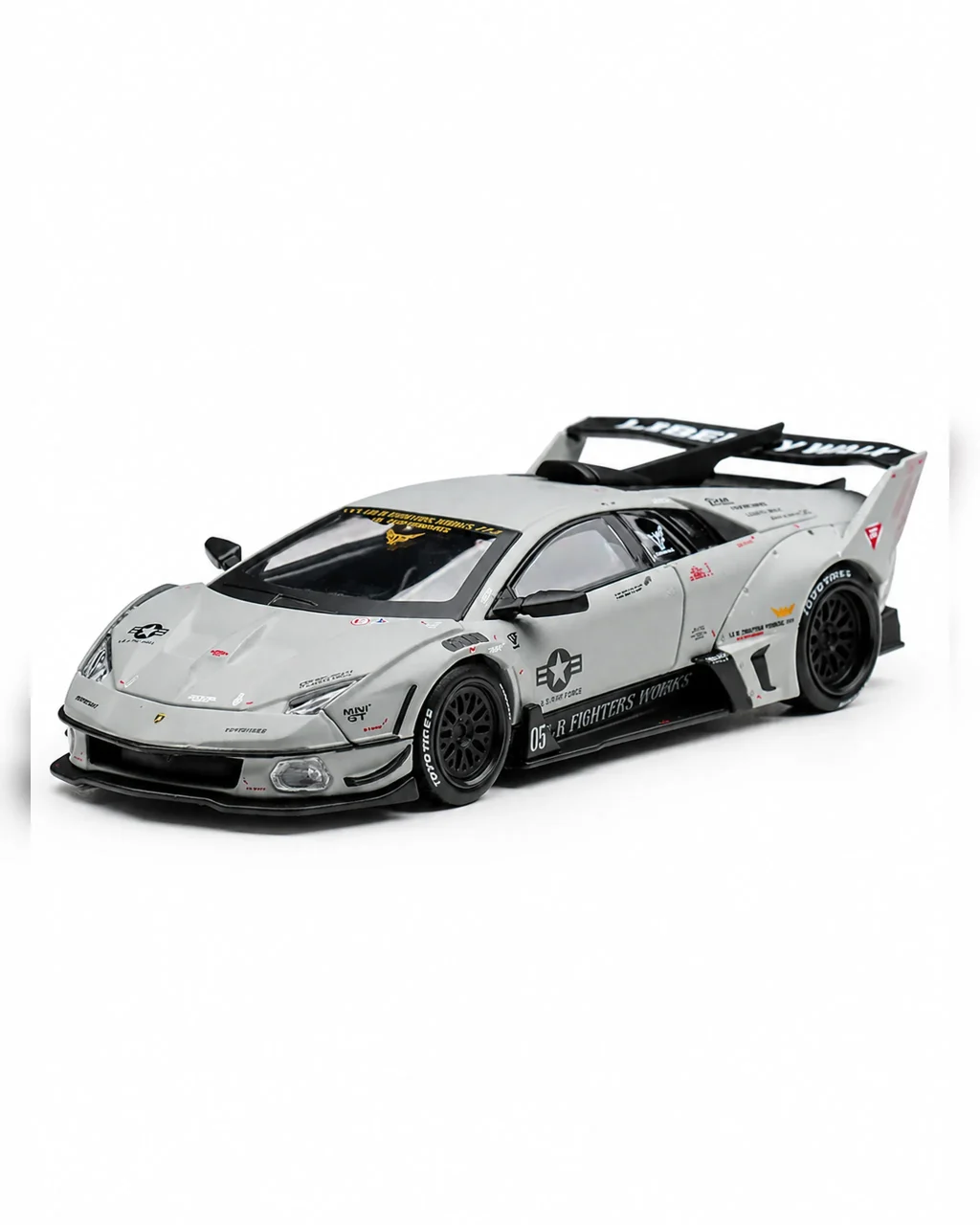
 Main view
 Angle 2
 Angle 3
MINI GT Porsche 911 992 GT3 RS #1304 1/64 Diecast Model
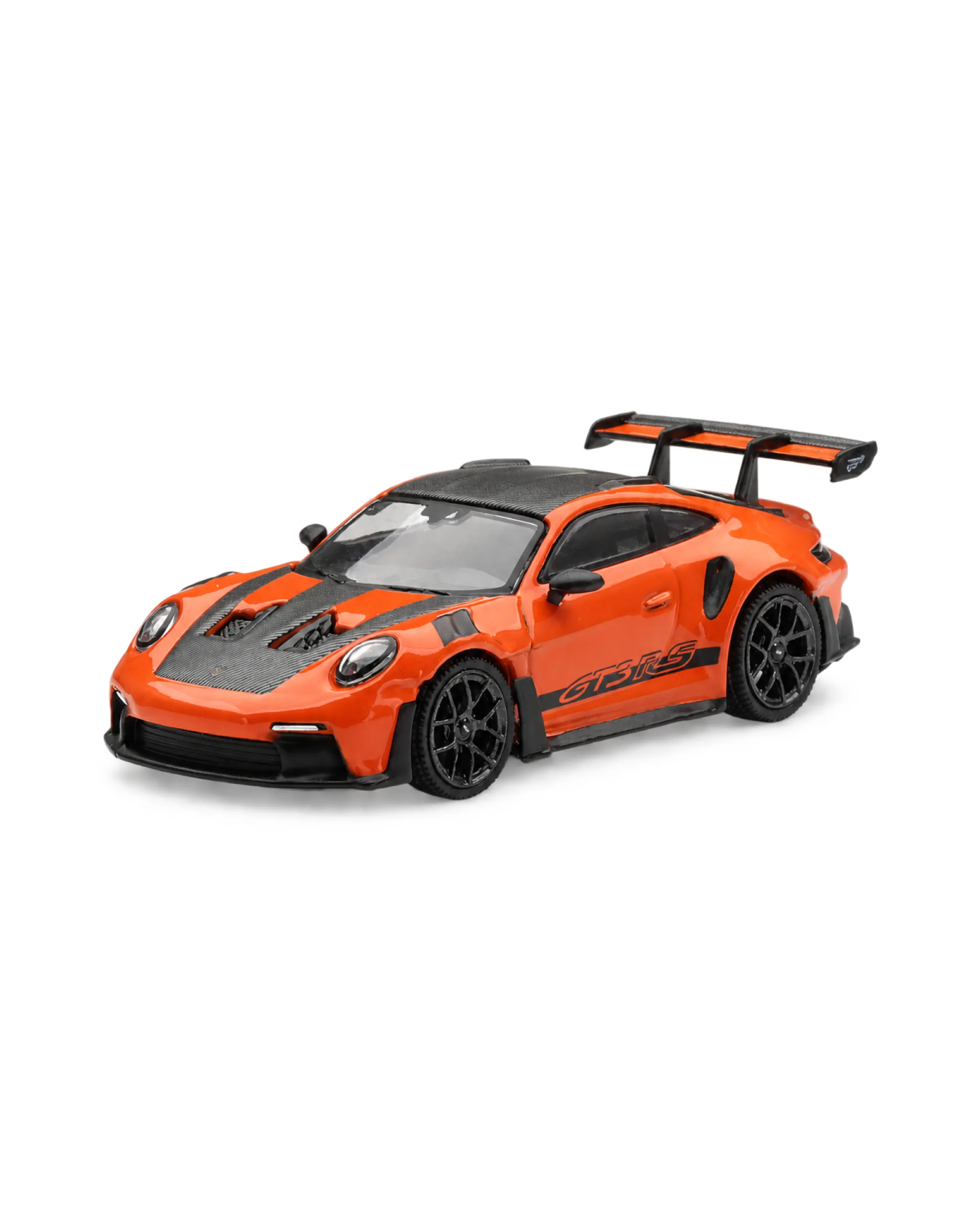
An orange 1/64 MINI GT Porsche 911 GT3 RS with a carbon centre panel and swan-neck rear wing, a static diecast model for 1/64 garage and pit-lane scenes.
An orange 1/64 MINI GT Porsche 911 GT3 RS with a carbon centre panel and swan-neck rear wing, a static diecast model for 1/64 garage and pit-lane scenes.
Available from NXSTUDIO — an independent retailer of 1/64 diecast model cars from established brands, with full product specifications, protective packaging, and tracked worldwide shipping.
About this model
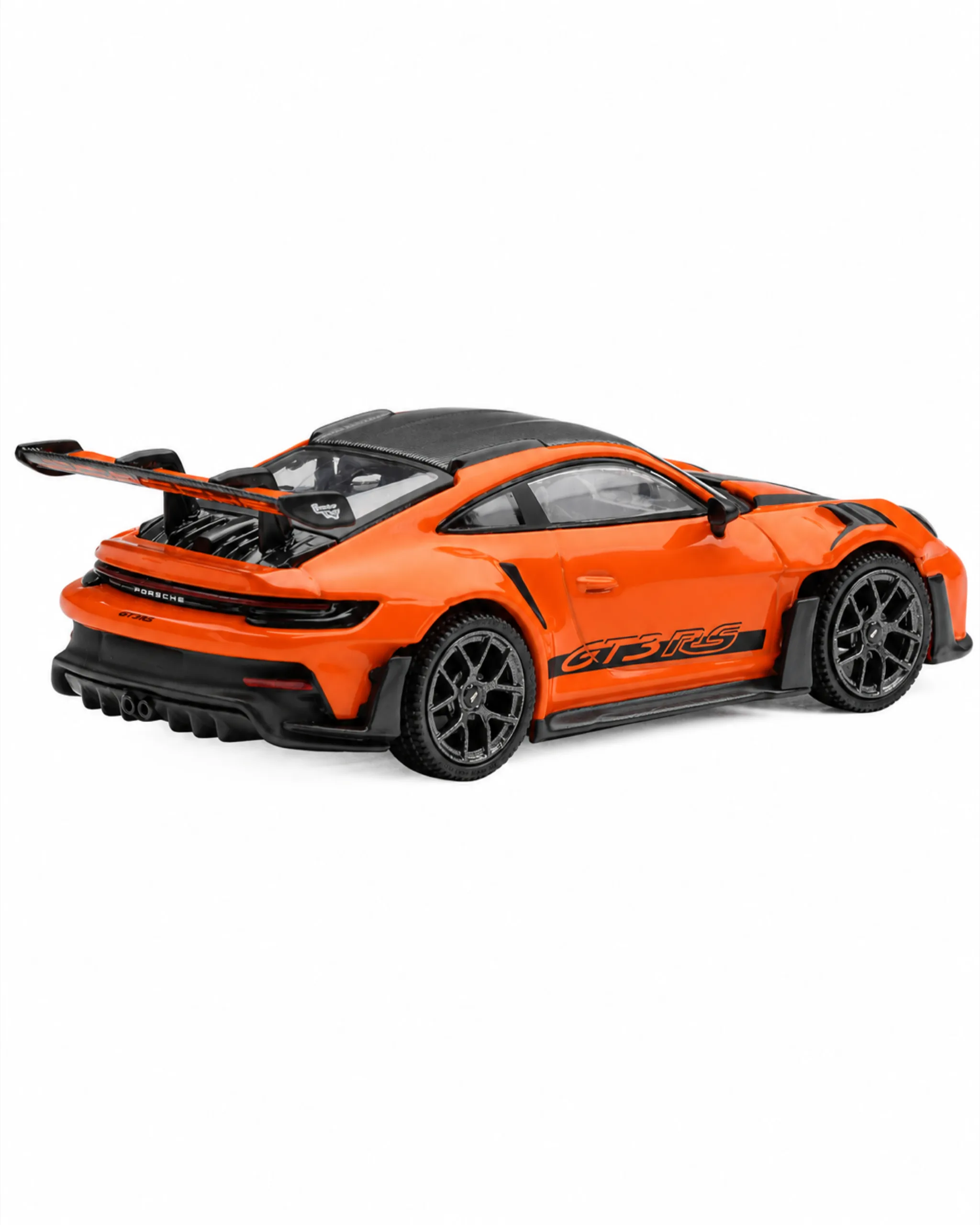
The swan-neck wing gives it away before anything else does. Instead of sitting on the boot lid, it hangs from supports that reach up and over the top of the blade, which puts the whole wing in clean air and makes the rear of the car look taller and more purposeful than the bodywork alone would. Then there are the front fenders: louvred openings cut along the top of each arch to let air out of the wheel wells, a detail you find on very few road cars because there is normally no need for it.
The model is 1/64 scale, so roughly 7 cm long and just over 2 cm tall to the top of that wing. The real car is around 4.6 m, which is where that figure comes from. It is a static diecast model with fixed panels and rolling wheels, and nothing on it opens.
A bright orange body over a carbon centre
The paint is a strong, saturated orange, and the photographs show it as a solid single-colour finish across the body — the doors, the rear quarters, the roof edges and the front bumper are all the same tone. Against that, the dark elements read as structure rather than decoration. A wide carbon-effect panel runs down the centre of the bonnet, interrupted by two large vents, and continues over the roof in the same woven texture. The same dark treatment appears on the front splitter, the side skirts, the wheel arch lips, the mirror pods and the entire rear wing assembly.
The result is a car that looks like it has a stripe running from the nose to the tail, except the stripe is made of exposed composite rather than paint. At this size it stops a bright single-colour model from reading as one flat slab.
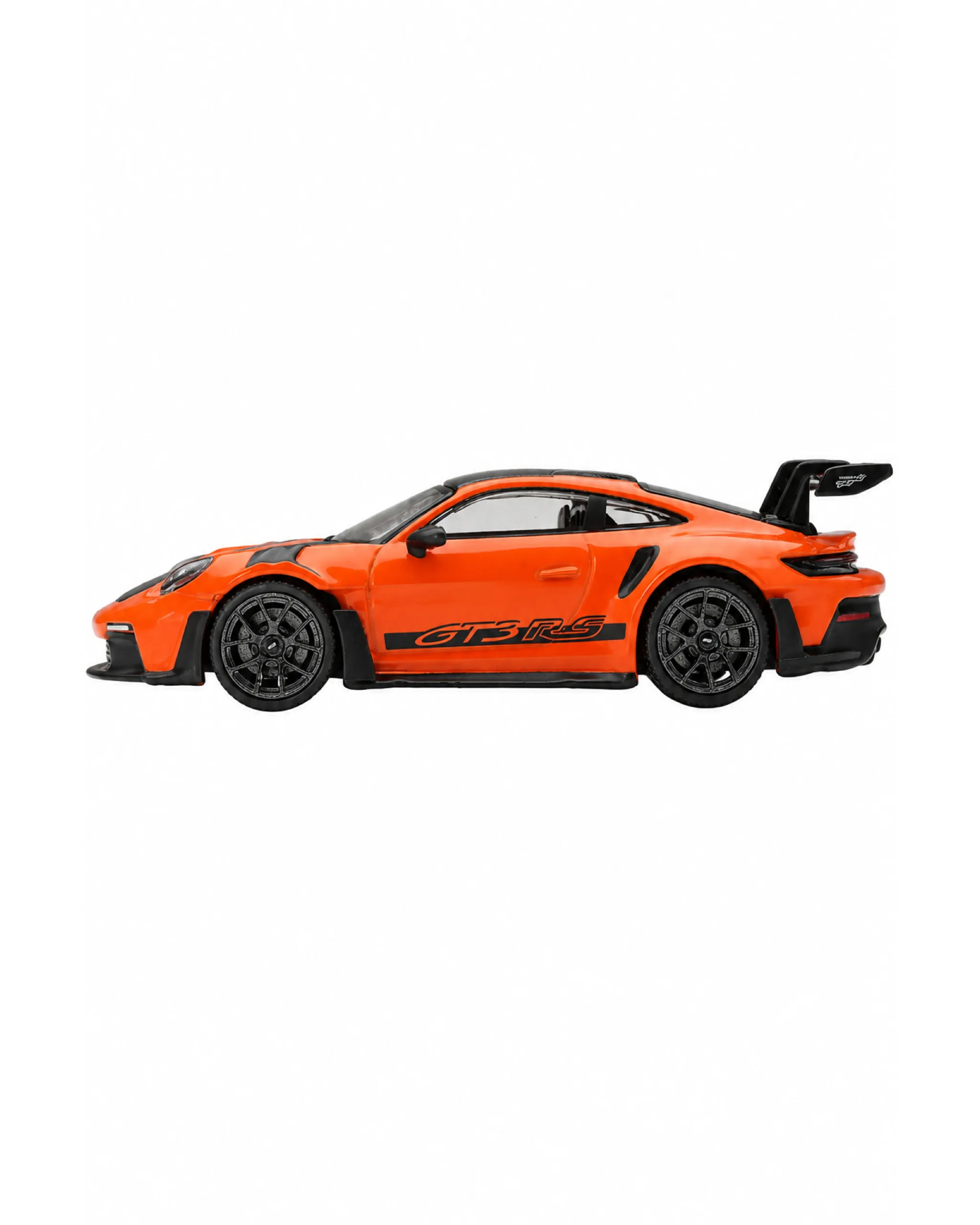
Lettering is minimal, and that is clearly deliberate. The model name runs along the lower door in a dark outline script, angled forward. There is a small printed graphic on the underside of the wing blade and a mark at the top of the wing endplate. The wheels are black multi-spoke rims with a subtle silver accent around the outer edge, and the tyres carry printed sidewall markings. That is essentially the whole inventory of graphics.
How a track-focused 911 differs from the road car it is built on
Put a standard 911 next to this and the differences are all in the same direction: more opening, more wing, more width. The front of this model has two large vents cut into the carbon bonnet panel, angled back from the nose, and the bumper below carries a wide dark splitter with a raised centre section. Ahead of the front wheels there are vertical fins. Along the flanks, behind each door, there are recessed intake shapes. The front arches are visibly wider than the body line behind them, and the arch lips are finished in dark material to mark the change in width.
At the rear the transformation is complete. The wing dominates: a wide blade on twin supports, with vertical endplates at each tip and a small printed mark on the underside. Below it the rear deck is broad and low. The whole car sits noticeably closer to the ground than a road-going 911 would, and the bodywork around the wheels is cut back to expose more of the tyre.
Where the vents stop being air and start being texture
This is the honest part. The louvres along the front fenders, the vents in the bonnet panel, and the intakes behind the doors are all shallow moulded relief. They are shaped and shaded to suggest openings, and they read correctly from a normal viewing angle. But they are not cut through, and they do not have depth behind them. Get down to a low three-quarter angle, close in, with light coming from behind the car, and the openings flatten into surface texture rather than reading as actual air paths.
In practice, that means the bonnet vents and the fender louvres look right from the side and from a slightly raised front three-quarter view, which is how most people look at a model on a shelf. It is only the low, raking angles that expose the trick, and those are not angles you look at a shelf model from very often.
Two smaller things worth knowing. The wing endplates and the supports are thin, and they are the parts to check when you unpack the model. And the script lettering along the door is a fine outline print on a curved surface, so it holds up well from the side and softens slightly as you move around to a three-quarter view.
A circuit garage suits it better than a street
This is a track car, so it wants a pit box, a garage bay or a parking structure rather than a shopfront. The Container Auto Repair Garage (598) at 29.7 x 19.7 x 14.5 cm is a good fit: a 7 cm car takes up roughly a quarter of the width, and 14.5 cm of height gives you room above the wing, which matters because the wing is the tallest part of the model and you do not want a low ceiling cutting it off.
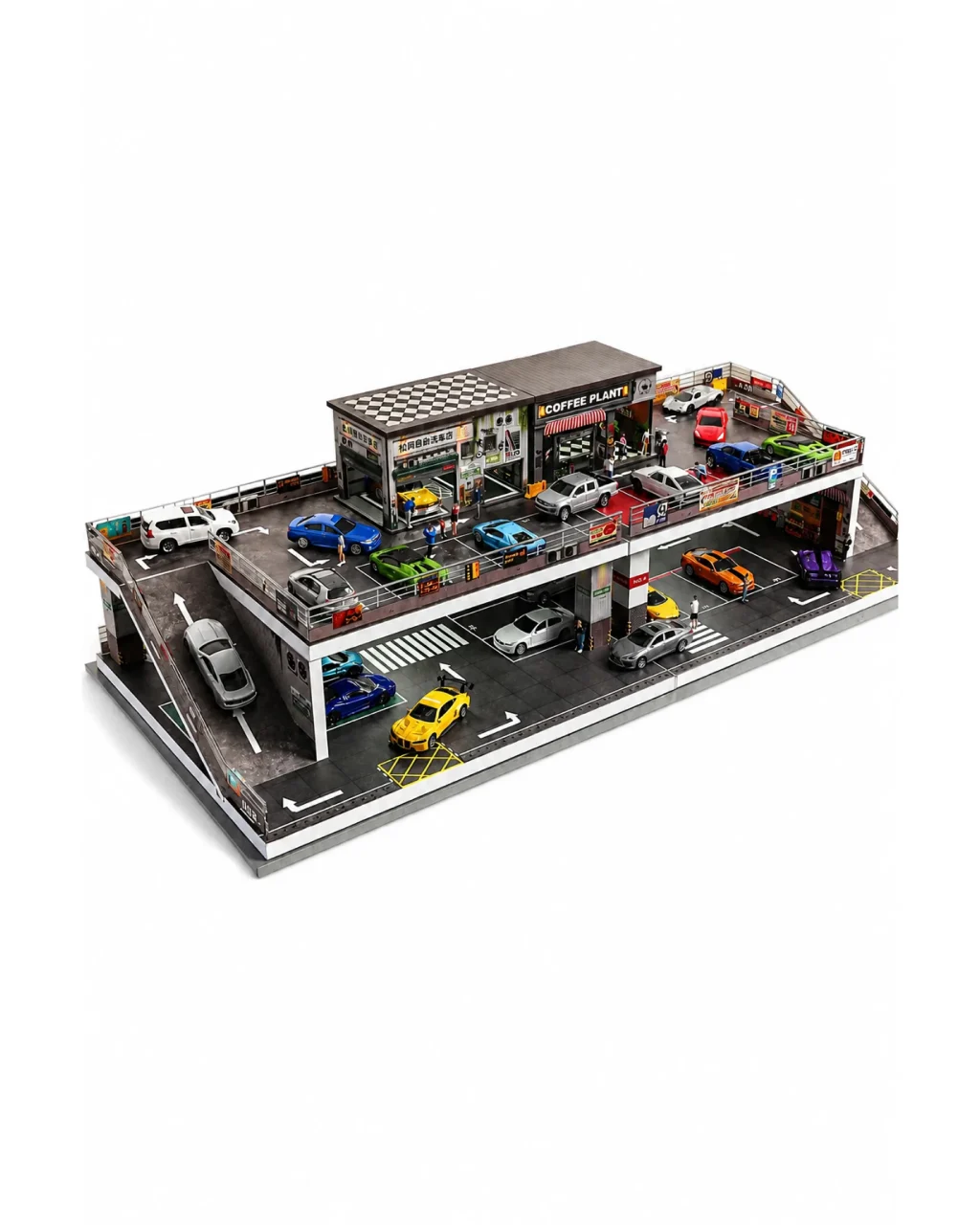
If you would rather have the car on a ramp or an open deck, the Japanese Slope Parking Lot (708) at 40.5 x 30 x 22 cm is the largest scene in the range, with 22 cm of height. It lets you set the car at an angle with a second vehicle behind it and still see the whole silhouette.
Box and handling
The model comes in a sealed colour box with printed artwork. No display case, no stand, no figure. Because the box is sealed you will not see the paint in your own light until you open it.
One more practical note: the carbon-effect surfaces and the black wheels hide dust well, but the orange paint does not. It is a bright, fairly saturated colour, and smudges on the doors and rear quarters are visible at a glance.
Specifications
| Specification | Value |
|---|---|
| Scale | 1/64 |
| Model type | Static diecast model car |
| Manufacturer | MINI GT |
| Packaging | Sealed Color Box Packaging |
| Product type | 1/64 diecast model car |
| Dimensions | 6–7 cm long (1/64 scale) |
| Weight | Approx. 90–120 g (with retail box) |
| Weight (loose) | Approx. 44–75 g (loose car) |
| Packaging size | Retail box approx. 10 × 4.5 × 3.5 cm |
| Spec note | Figures are approximate, measured from the manufacturer's posted packaging size and retailer weight data. They will be replaced with values from a physical parcel once stock ships. |
| Category | Cars |
Included / Not included
- Included: MINI GT Porsche 911 992 GT3 RS #1304 1/64 Diecast Model in Sealed Color Box Packaging.
- Not included: Display case and figures. These must be purchased separately.
Gift Angle
This is a gift for someone who wants the fastest-looking version of a familiar car. Almost everyone recognises a 911, so there is no explaining to do — but the wing, the louvred fenders and the low stance make it clear at a glance that this is not the ordinary one.
The reaction tends to focus on the rear. People turn the model around to look at the wing and then notice it is mounted from above rather than below, which is an unusual arrangement if you have never seen it. That is the detail that makes this model interesting to hand to someone, and it is why a bright single-colour car like this makes a good present: there is no graphic to decode, just hardware to look at.
Shipping & duties
Ships in 7–14 business days via tracked international shipping. Import duty is prepaid at checkout for the United States, the European Union, Turkey and Indonesia, so nothing further is due at delivery for those destinations; all other destinations ship duty-unpaid. Read the full shipping guide →
Frequently asked questions
What colour is the car?
The body is a bright, saturated orange, with carbon-effect dark panels down the centre of the bonnet and over the roof, plus dark splitter, skirts, arch lips, mirrors and rear wing.
Are the bonnet vents and fender louvres open?
No. They are shallow moulded relief shaped to look like openings. They read correctly from normal viewing angles but are not cut through, so they flatten at low, raking angles.
How big is the model?
It is 1/64 scale, so roughly 7 cm long and a little over 2 cm tall at the top of the rear wing. The real car is around 4.6 m long.
Does anything open on the model?
No. All panels are fixed and the wheels do not steer. The wheels roll, and there are no opening features.
Is there a display case in the box?
No. It arrives in a sealed colour box with printed artwork. A clear case, a stand and figures are all sold separately.
Is it suitable for a young child?
No. It is a static diecast display model for ages 14 and over. The wing endplates and supports are thin and are not built to survive being played with.
Similar products
Pair this model with other 1/64-scale models from the Collector Series to build a full miniature city on your desktop.
// Prices shown in USD. Shipping and duties are confirmed at checkout.