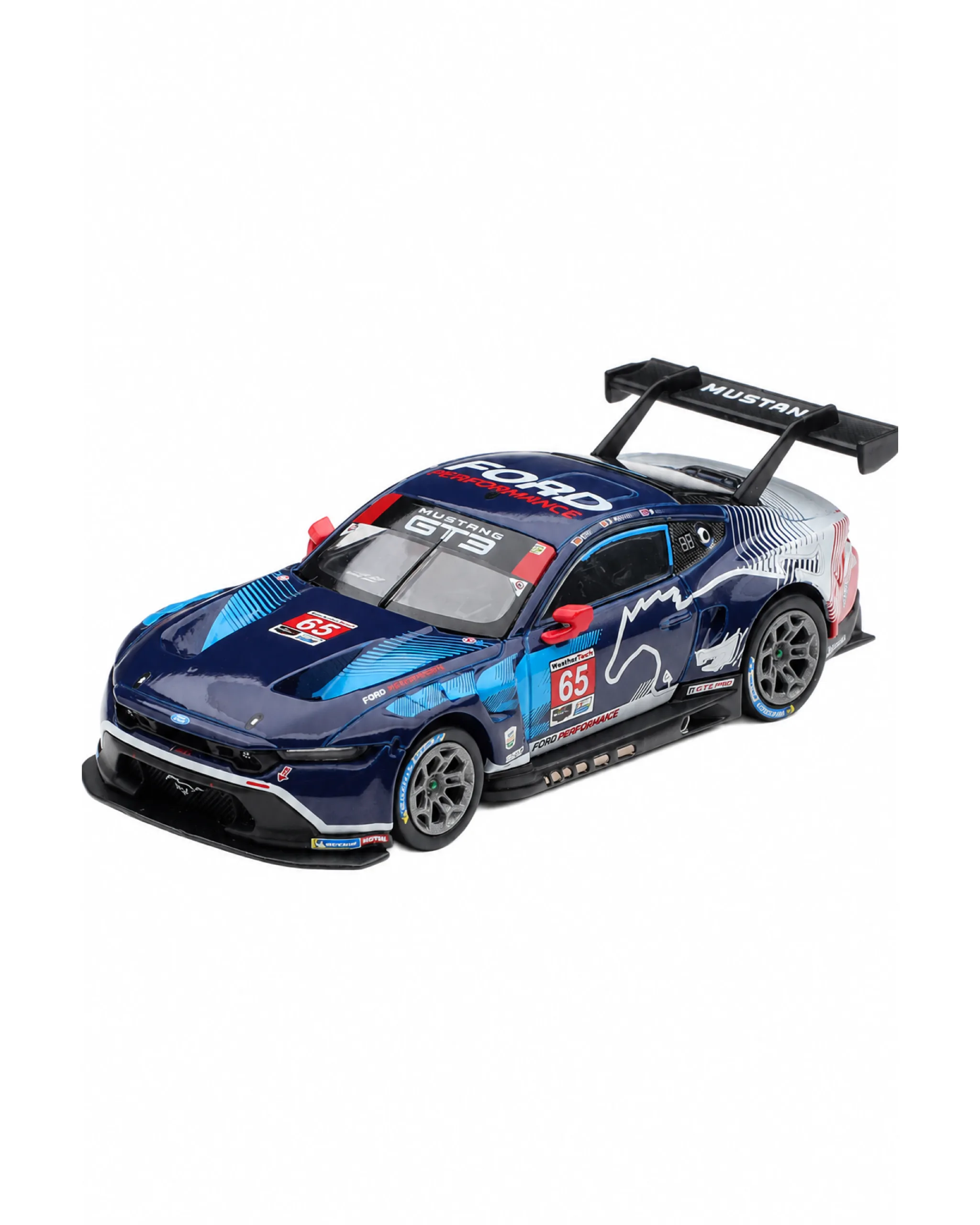
 Main view
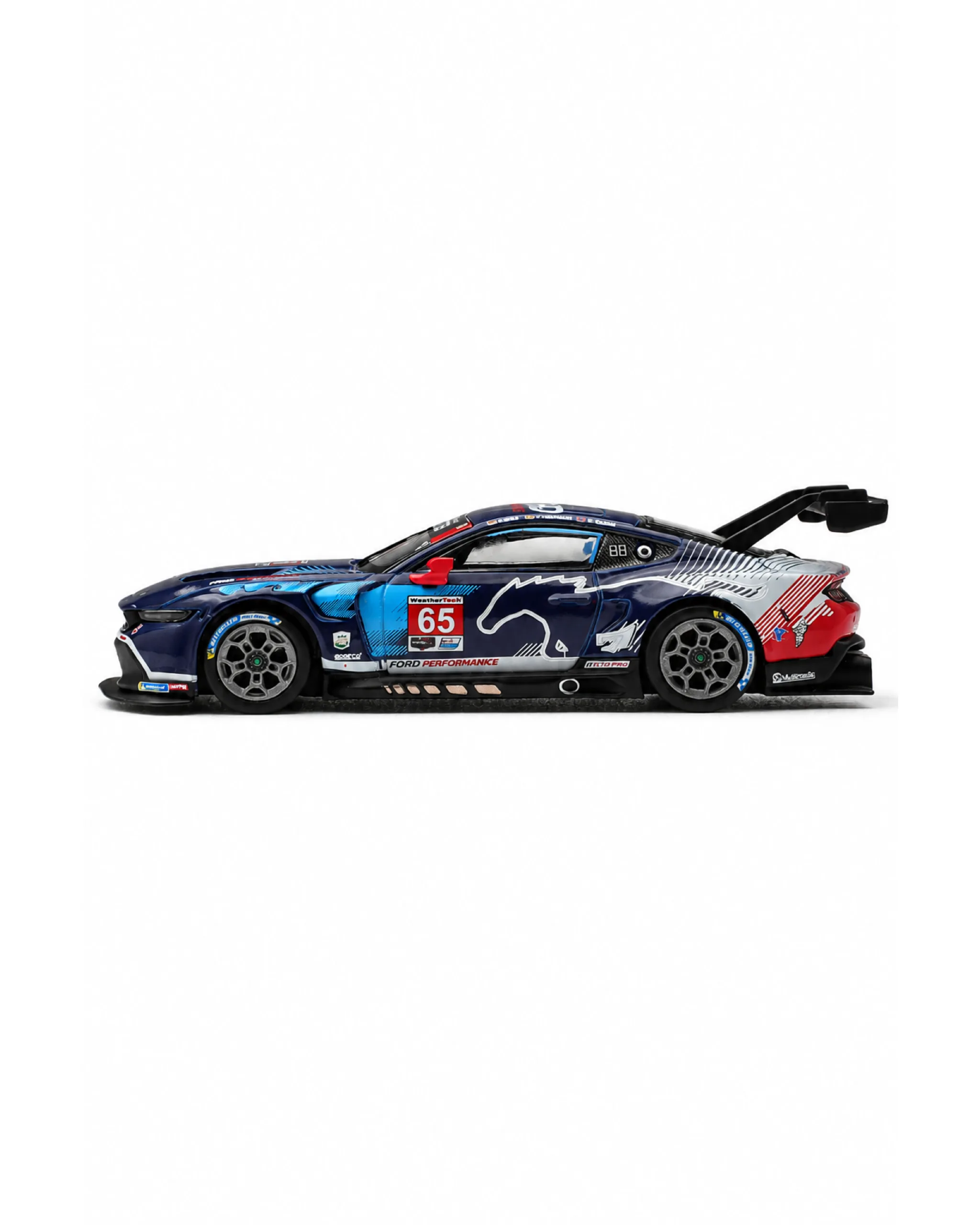 Angle 2
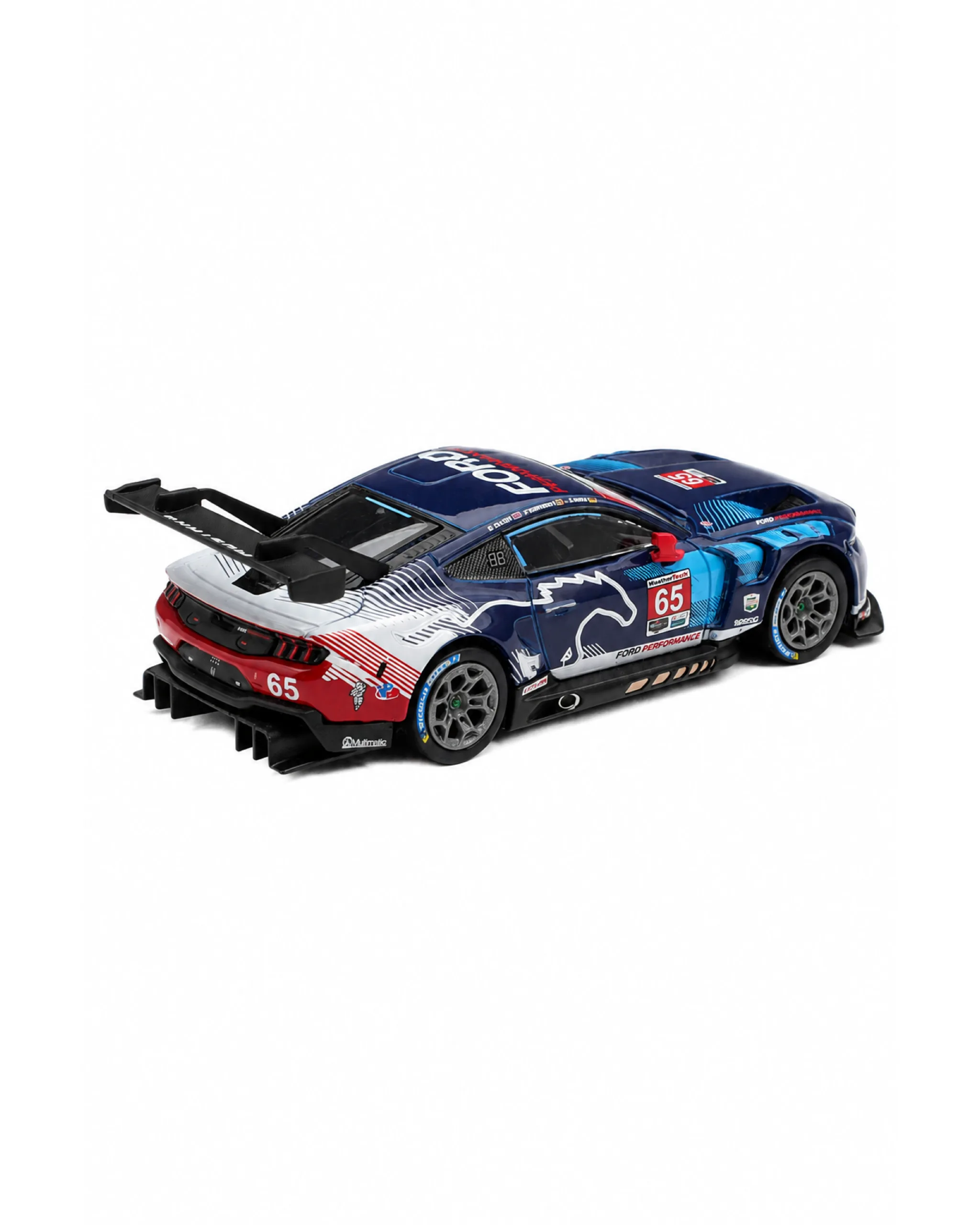 Angle 3
MINI GT Ford Mustang GT3 #1240 1/64 Diecast Model
Blue fading to silver: a 1/64 MINI GT Ford Mustang GT3 with a big horse graphic, a roughly 7 cm static diecast model for 1/64 parking and pit-lane scenes.
Blue fading to silver: a 1/64 MINI GT Ford Mustang GT3 with a big horse graphic, a roughly 7 cm static diecast model for 1/64 parking and pit-lane scenes.
Available from NXSTUDIO — an independent retailer of 1/64 diecast model cars from established brands, with full product specifications, protective packaging, and tracked worldwide shipping.
About this model
Strip a Mustang back and you find out how much of it was there for the road. The bonnet gets cut for vents, the arches get pulled out over wider wheels, the sills grow strakes and the boot carries a wing taller than the roof. What is left is still unmistakably a Mustang — the same long bonnet, the same fastback fall away from the cabin — but every panel has been reworked for a job it was not designed for. This model records that transformation, because the road car underneath is still visible in the shape while the racing hardware sits on top of it.
The model is 1/64 scale, which comes out at roughly 7.2 cm nose to tail, and just over 2 cm tall at the highest point of the rear wing. The real car is about 4.8 m long. It is a static diecast model: fixed panels, rolling wheels, no steering, nothing that opens.
Dark blue fading to silver, with a horse the size of the door
The colour scheme is a gradient rather than a flat paint job. The front half of the car is a deep blue, and it fades towards the rear into a pale silver-white, with a fine pinstriped section across the rear quarter panel where the two meet. Laid over that fade is a large white outline of a galloping horse, taking up most of the door panel — drawn as a line graphic rather than a filled shape, so the blue and silver underneath stay visible. A second, smaller horse silhouette sits on the rear flank.
The lettering is white on the dark sections and dark on the light ones, which is a nice bit of print discipline at this size. The number sixty-five appears twice, on the bonnet and on the door, in white on a red square. The mirror caps and the bonnet vent surrounds are picked out in red, the only warm accents on an otherwise cold-toned car.
The rear wing is a single wide element in matte black on two upright supports, with lettering along the top surface and a small vertical plate at each end. The wheels are a fine multi-spoke design in dark grey, with printed tyre lettering in blue around the sidewalls.
Vents, strakes and the parts that make it a race car
Two details do most of the work of selling the transformation. The first is the bonnet: louvred openings are cut into it as dark recesses rather than printed marks, so from a three-quarter angle they read as actual holes in the bodywork with shadow inside. The second is the sill area, where a run of vertical strakes sits along the lower flank ahead of the rear wheel. At 7 cm those strakes are tiny, but they break up what would otherwise be a long, blank piece of side bodywork.
The nose carries the most visual weight
The front of the car is where this casting has the most to do and the least room to do it. The Mustang's face is a big, dark, rectangular grille with a badge in the middle, flanked by narrow headlamps, and under it a splitter that juts forward from the bumper on two support stays. On the model, the grille is a broad dark panel occupying most of the nose, with a small oval badge centred in it and a pair of raised horizontal bars across the opening. The headlamp units are narrow, angled slivers with a warm amber-gold highlight inside a dark surround.
Because the grille is so large and so dark, it becomes the anchor of the whole design — your eye lands there first from any angle, and everything else on the car is read relative to it. The splitter below it extends well past the bodywork, and the outer corners have small vertical fins.
An open parking bay, not a showroom
A GT3 car reads best on a pit, garage or parking scene rather than a storefront. The Japanese Parking Lot (855) at 29.5 x 19.8 x 12 cm is the pairing I would pick, because an open multi-bay layout suits a race car sitting between other cars rather than being the only object in the frame. The 29.5 cm width gives a 7.2 cm model room to sit at an angle, and 12 cm of height is comfortable clearance for a 2 cm car with a wing on it.
The lighting matters here more than usual. This car has both a dark blue front half and a silver rear half, and a silver panel behaves like a mirror. In a scene with a coloured floor and side light, the gradient across the rear quarter reads as a smooth fade. On a plain white surface under one overhead lamp, the silver goes flat and the fade looks like two colour blocks butted together.
Sealed box, and the flattest part of the model
It arrives in a sealed colour box with printed artwork, sitting in a moulded tray. There is no display case, no stand and no figure in the box. Check the mirrors, the splitter corners and the wing endplates when you open it, because those stand proud of the bodywork.
The limitation is the nose. At 1/64 the grille and the headlamp internals are simplified. The grille is a solid moulded shape with raised bars across it rather than an open mesh, so there is no depth inside it and no shadow behind the bars — from straight ahead, the front of the car reads slightly flatter than the real thing does. The headlamps are the same story: the amber highlight is a painted or moulded element rather than a separate lens, so the units look like flat graphics up close. On a car whose whole character is built around a big, deep, dark front aperture, that is the one place where the miniature gives up some of the real car's presence.
A second, smaller trade-off: the pinstriped section where the blue fades into silver is a fine print on a curved quarter panel, so it is crisp from the side and softens towards a three-quarter rear view.
Specifications
| Specification | Value |
|---|---|
| Scale | 1/64 |
| Model type | Static diecast model car |
| Manufacturer | MINI GT |
| Packaging | Sealed Color Box Packaging |
| Product type | 1/64 diecast model car |
| Dimensions | 6–7 cm long (1/64 scale) |
| Weight | Approx. 90–120 g (with retail box) |
| Weight (loose) | Approx. 44–75 g (loose car) |
| Packaging size | Retail box approx. 10 × 4.5 × 3.5 cm |
| Spec note | Figures are approximate, measured from the manufacturer's posted packaging size and retailer weight data. They will be replaced with values from a physical parcel once stock ships. |
| Category | Cars |
Included / Not included
- Included: MINI GT Ford Mustang GT3 #1240 1/64 Diecast Model in Sealed Color Box Packaging.
- Not included: Display case and figures. These must be purchased separately.
Gift Angle
This is a gift for a Mustang person, and there are a lot of them. It works because the car is still recognisably a Mustang even in full racing trim — the long bonnet, the fastback roof, the wide stance — so somebody who has owned one or grown up around one will recognise it instantly. It also suits someone who likes American cars in a collection that is otherwise full of European machinery.
The reaction usually starts at the horse. The big outline graphic on the door is the first thing anyone points at, and then they notice that the paint behind it changes colour from front to back. People who are not collectors tend to be surprised that a car this small has a gradient finish and a wing on two supports.
Shipping & duties
Ships in 7–14 business days via tracked international shipping. Import duty is prepaid at checkout for the United States, the European Union, Turkey and Indonesia, so nothing further is due at delivery for those destinations; all other destinations ship duty-unpaid. Read the full shipping guide →
Frequently asked questions
Is the paint a single colour?
No. The body is a gradient, deep blue at the front fading into a pale silver-white towards the rear, with a fine pinstriped band across the rear quarter where the two meet.
How long is the model?
It is 1/64 scale, so roughly 7 cm long and a little over 2 cm tall at the rear wing. The real car is about 4.8 m, which is where that figure comes from.
Does the bonnet or any door open?
No. All panels are fixed and the wheels do not steer. The wheels roll, but there are no opening features anywhere on the model.
Are the bonnet vents open holes?
They are cast as recesses in the bonnet rather than printed marks, so they read as openings with shadow inside them. They are not cut through to the other side.
Does it come with a display case?
No. It ships in a sealed colour box with printed artwork. A clear case, a stand and figures are sold separately.
Is this a toy?
No. It is a static diecast display model for ages 14 and over, not built to be played with. Small parts such as mirrors and wing endplates can come loose.
Similar products
Pair this model with other 1/64-scale models from the Collector Series to build a full miniature city on your desktop.
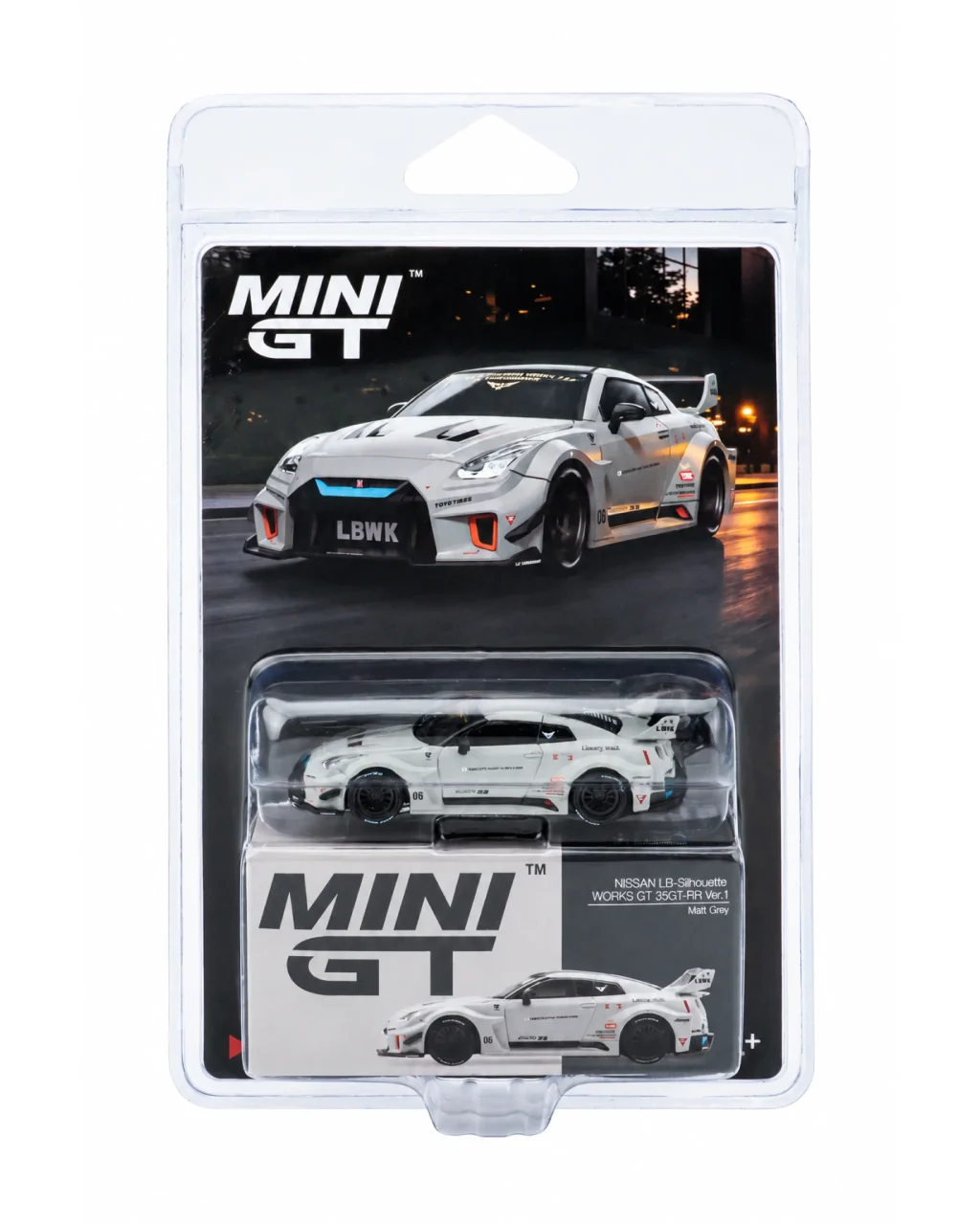
// Prices shown in USD. Shipping and duties are confirmed at checkout.